What Happens When a Rich Country Can’t Import Food?
The Norwegian butter crisis of 2011 stands as one of the more surreal economic disruptions of the early twenty-first century. It wasn’t caused by war or financial collapse, yet it brought the nation to a standstill over something as ordinary, essential, and unassuming as butter. It unfolded in Norway, a wealthy, highly developed country with a sophisticated welfare state and one of the highest standards of living in the world, rather than in some remote, agrarian backwater. And yet, for several weeks in late autumn and early winter, Norwegians found themselves staring into refrigerators and supermarket shelves with growing dismay: the butter was gone.
It began, as many crises do, with weather. Heavy rains during the summer of 2011 drenched pastures across eastern Norway, turning meadows into spongy bogs and forcing dairy farmers to keep cows indoors far longer than usual. Less grazing meant more than just lower milk yields; it also led to poorer-quality feed, hay harvested late and damp, silage stripped of nutrient density. That double blow translated directly into weaker lactation. The numbers were stark: national milk production fell by some 20 million litres over the summer months, a drop that might seem marginal until you consider that butter is churned from cream, which itself is skimmed from milk. Every missing litre of milk meant roughly 25 grams less butter, give or take, depending on the cow’s diet and the season. That deficit didn’t vanish in autumn; it carried over, compounding.
And it coincided with two other factors that turned a dip into a deficit. First, Norwegian consumers had recently shifted toward higher-fat diets, influenced by popular low-carb and paleo-style eating trends, notably the kosthold craze, a local variant of Atkins that swept through gyms, offices, and even school canteens. Television chefs, most famously Sweden’s Leila Lindholm (whose buttery buns were said to have single-handedly strained the entire Nordic supply chain), had spent months extolling the virtues of full-fat dairy, urging viewers to “dare to use butter” as a mark of culinary integrity. Sales figures told the story: a 20 percent jump in October, then another 30 percent in November. Butter wasn’t just back, it was essential, a badge of health-conscious rebellion against decades of dietary guilt.
Second, the state-run dairy cooperative TINE, the near-monopoly responsible for virtually all domestic butter production, and indeed for regulating quotas, pricing, and even export authorisations, had forecast demand with the optimism of a postwar planner. Founded in 1942 and formalised after the war to stabilise prices and protect smallholders, TINE functioned less like a profit-seeking corporation and more like a quasi-public utility, managing scarcity by design. Its board, appointed by farmer cooperatives and ratified by the Ministry of Agriculture, treated butter less as a commodity than as a social good: stable, predictable, and shielded from “distortions” like sudden consumer fads. When the surge came, the system couldn’t pivot. Farmers claimed they’d received no early warning of rising quotas; meanwhile, TINE had quietly exported surplus stocks to Germany and the Netherlands in the spring, assuming domestic demand would remain static. By November, the gap between supply and demand had yawned into a chasm: Norway faced a shortage of 500 to 1,000 tons of butter.
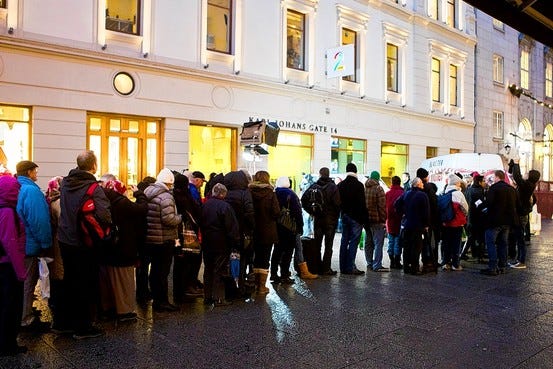
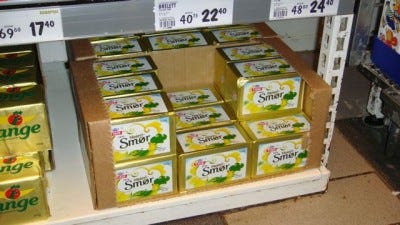
The shortage may have seemed minor, only one or two shipping containers’ worth. Yet in a country of five million, where butter is a staple, slathered on brødskiver, melted into sauces, baked into kransekake, that small gap was enough to trigger full-blown smørpanikk: butter panic. Social media erupted with frantic posts. Supermarkets imposed purchase limits, two packs per customer, then one, then none. Empty shelves were photographed and shared like warzone dispatches. People began hoarding. One Oslo shop reported a customer buying 54 packs in a single transaction and driving off, unsmiling, into the fjord-side dusk.
The panic found its native habitat on finn.no, Norway’s answer to Craigslist, where butter, still in its original packaging, often refrigerated in coolers, began appearing under listings titled “Smør. Genuint. Ikke smurt.” (Butter. Genuine. Not used.). Students in Bergen auctioned off their emergency reserves to fund graduation parties; one group raised over 8,000 kroner from a single 500-gram block, bidding escalating in increments of 50 kroner like a high-stakes game of Kortstokk. A national daily, Dagbladet, seized the moment with marketing flair: new subscribers would receive half a kilo of butter, delivered by courier, chilled, alongside their first weekend edition. Demand for the offer overwhelmed servers; within hours, the promotion was quietly withdrawn, the butter presumably redistributed to the newsroom canteen.
Ordinarily, a rich country facing a temporary domestic shortfall would simply import the missing goods. But Norway’s relationship with foreign dairy is complicated. Although Norway stands outside the European Union, it participates in the European Economic Area, granting access to the single market. Agriculture, however, remains fiercely protected, a holdover from postwar food security doctrine. High tariffs on imported dairy products, designed to shield Norwegian farmers from cheaper competition, suddenly became a liability. The tariff on butter stood at 25.19 kroner per kilogram, roughly 280 percent ad valorem, which meant a standard 250-gram pack of Danish Lurpak, which might cost £2 in the UK, would clear customs at around £32 in Norway. And yet, people paid it. Desperation rendered price sensitivity irrelevant. In mid-December, single packs of imported butter were routinely changing hands for 300 to 400 Norwegian kroner, roughly £30 to £40, on online marketplaces. One eBay-style listing on finn.no reportedly closed at 1,200 kroner, though the seller later admitted it was a prank… “mostly.”
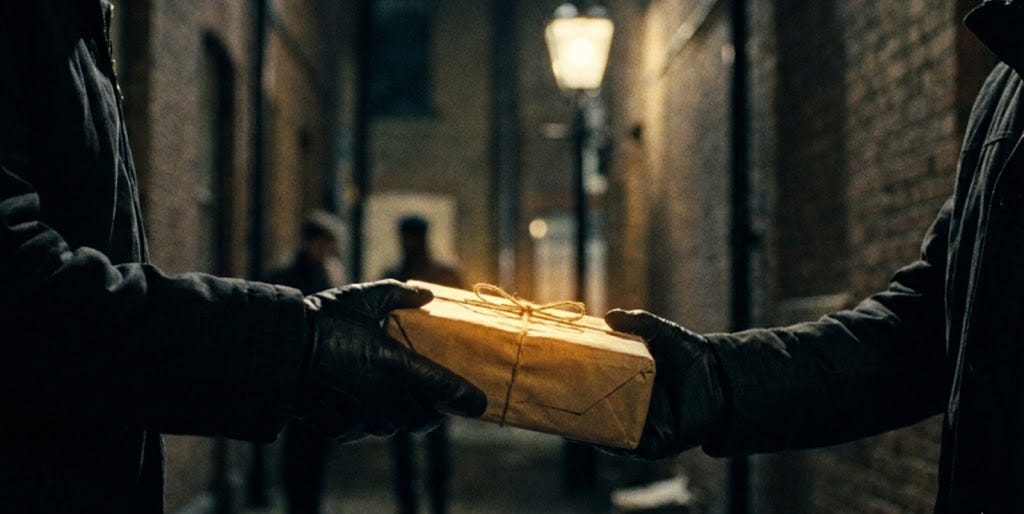
The sight of butter just across the border, in Sweden, a mere drive away, only deepened the sense of absurdity. Sweden, though geographically adjacent, wasn’t immune to the same weather anomalies, but its market, while similarly concentrated, was more porous: Danish and German butter flowed in freely, and shelves remained stocked. Swedes, with a mixture of neighbourly concern and mischievous delight, began posting offers online: “Driving to Oslo Saturday, can bring 10 kg butter. Petrol only.” Some crossed the border openly, shopping bags bulging, only to be turned back by customs officials enforcing the letter of the tariff law. Others tried smuggling: hiding butter in luggage, stashing it in car door panels, even labelling vans Nøt bütter in a doomed attempt at bureaucratic camouflage. Authorities intercepted multiple attempts, fining individuals and confiscating illicit dairy. In one widely reported incident, a man was caught with 27 kilograms of butter strapped to his body under a winter coat, he claimed it was for his mother’s Christmas baking. (“She makes julekake for the whole village,” he explained, as officers peeled fløypakker from his ribs.)
The real butter rush, however, happened quietly at Svinesund, the bridge linking southeastern Norway to Sweden, where Swedish supermarkets reported selling twenty times their normal volume, nine out of ten customers Norwegians, many parking in long arcs on the Swedish side, trundling trolleys back across the border under the indifferent gaze of tollbooth cameras. One store installed extra freezers and hired bilingual staff just to handle the influx. Meanwhile, in Kristiansand and Oslo, the Danish dairy entrepreneur Karl Christian Lund turned crisis into charm offensive, handing out 2,000 packs of his own brand, Lurpak, with a bow and a smile: a PR coup wrapped in foil, and a pointed reminder that cooperation, not quotas, might yet save Christmas.
The Danish broadcaster DR, seizing the moment with typical Nordic deadpan, aired a satirical emergency butter appeal, a mock public service announcement styled like a wartime broadcast. “This is not a joke,” intoned the voiceover over grainy footage of forlorn children and empty breadbaskets. “There are people in this country without butter.” The stunt, intended as comedy, inadvertently sparked a real response: viewers donated over 4,000 packs of butter, which were then shipped to Norway and distributed through churches and community centres. Even Danish airports and ferries began stocking extra butter in duty-free outlets, treating it less as a luxury item and more as a lifeline.
Why, in the face of such scarcity, didn’t Norwegians simply switch to margarine or other spreads? The answer lies in taste, tradition, and a certain national stubbornness. Margarine is available in Norway, yet it holds a low place in the national imagination. People see it as nutritionally, texturally, and even culturally inferior. Norwegian baking, in particular, relies on butter’s specific fat content (around 82 percent, give or take), its precise melting point (which ensures pepperkaker spread just enough in the oven), and its slight tang, the whisper of lactic fermentation that no hydrogenated oil can replicate. Substituting margarine in svele or bløtkake doesn’t just alter the taste, it undermines the dish’s identity. Moreover, margarine’s origins as a wartime ersatz, coupled with its natural greyish-beige pallor (the yellow is added purely for visual reassurance), left it permanently suspect. As one Oslo baker put it at the time: “Margarine is what you use when you’ve given up on life. Butter is what you fight for.”
The shortage was especially galling because it threatened the very symbol of everyday butter, the kind meant to be sliced like cheese and spread on toast, not the industrial or baking-grade kind used in bulk. This wasn’t a crisis for patisseries alone; it was a domestic emergency. Households rationed their remaining stocks, cutting thinner and thinner pats, reusing butter wrappers to scrape out the last greasy film. People debated the ethics of butter-sharing: was it generous to offer a guest buttered toast, or reckless? One man in Bergen admitted to rationing his final 50 grams over eleven days, applying it with a palette knife “like restoring a fresco.” Toast without butter wasn’t just unsatisfying, it was, in the national imagination, incomplete, un-Norwegian. Dry bread with a topping? That was just sadness on a plate.
The free hand of capitalism, famously invoked in such moments, proved uncharacteristically slippery, literally. With domestic supply frozen and imports throttled by tariffs, the market couldn’t self-correct quickly enough. The mechanism jammed. Prices surged, but even at £32 a pack, supply couldn’t meet demand because customs clearance moved at bureaucratic speed, not panic speed. As one commentator dryly observed, the free hand of capitalism had too much butter on it, it was all slippy and couldn’t grip the problem. It could pass the butter, yes, but it couldn’t pick up the corners. The butterfingers of capitalism had, in a single phrase, summed up everything that was wrong with the response: well-intentioned, structurally sound, and utterly failing in execution.
The panic had texture, smell, and sound. In Oslo’s Grünerløkka district, a pop-up “butter bar” briefly appeared in a disused kiosk, staffed by students in white coats, dispensing 5-gram rations on miniature wooden spoons, like communion wafers of fat. Patrons waited in queues that snaked past vintage boutiques, clutching numbered tickets printed on recycled Aftenposten pages. The venture lasted three days before customs officials shut it down, citing unlicensed food handling, though rumour held that TINE had quietly lodged a complaint.
Meanwhile, the DIY renaissance flourished in earnest. Aftenposten’s two-page butter-making tutorial, complete with hand-drawn sketches of jars, whisks, and chilled bowls, was downloaded over 140,000 times in a single weekend. Households churned cream in stand mixers, food processors, even repurposed paint shakers borrowed from hardware stores. One man in Tromsø reported success using a Nalgene bottle strapped to his snowmobile’s luggage rack, letting the vibrations of a 40-kilometre fjord crossing do the work. The results were… variable. Some batches emerged golden and fragrant; others, over-whisked or under-salted, resembled greasy paste, or worse, surstrømming’s unfermented cousin. Health authorities issued a gentle advisory: homemade butter, while legal, carried risks of bacterial contamination if not handled with “the rigour of a microbiologist and the patience of a monk.”
On finn.no, a new etiquette emerged. Sellers described provenance like sommeliers: “Danish Lurpak, bought 10 Dec at ICA Svinesund, kept in cooler with ice packs, never above 6°C. Original wrapper, unbroken seal. No freezer burn. Smells like childhood.” One listing, for a 250g pack with a faint dent in the foil, included three photos of the item resting on different textiles, linen, wool, and bunad embroidery, to prove its authenticity through contextual dignity. Buyers judged transactions by a new measure they called “butter integrity,” valuing quality and authenticity above price.” A five-star review read: “Arrived in discreet thermos. Cold. Firm. Cut like marble. Used it for julekake. My grandmother wept, not from sadness.”
The smuggling trade grew increasingly inventive, and theatrical. At Oslo’s Torp airport, a woman was detained after security scanners revealed sixteen individually wrapped blocks taped beneath her long woollen skirt; she claimed they were “emergency provisions” for a family reunion in Stavanger. In Halden, near the Swedish border, customs officers intercepted a van with false floor panels concealing 120 kilograms of Danish butter, packaged, absurdly, with handwritten thank-you notes from Swedish donors: “To our northern friends, may your pepperkaker rise straight and proud. With love, Göteborg.” One smuggler, caught at a checkpoint outside Moss, insisted the three kilos in his backpack were “medicinal butter,” citing an obscure 1958 regulation permitting duty-free import of “health-related dairy derivatives” for chronic fatigue, a claim promptly debunked by the Norwegian Medicines Agency, which noted that while butter contains vitamin A, it was not, in fact, an approved pharmaceutical agent.
Even language bent under the strain. The term smørøyd (“butter-eye”) entered everyday speech, describing the vigilant, slightly haunted look of shoppers scanning dairy aisles, heads tilting toward the telltale glint of foil beneath stacked yoghurts. Å smøre for livet (“to butter for one’s life”) became a verb phrase, deployed with grim humour: “Jeg må smøre for livet før møtet, har bare ett smørbrød igjen.” (“I must butter for my life before the meeting, I’ve only one buttered slice left.”)
Perhaps the strangest footnote belonged to the Norwegian Broadcasting Corporation, NRK, which, amid news reports and parliamentary debates, quietly reran a 1974 episode of the children’s programme Sesam Stasjon, in which the Muppet Alfred demonstrates butter churning in a glass jar. Viewership spiked 300 percent. Parents reported toddlers attempting to replicate the experiment using juice boxes and oat milk. NRK declined to comment, but internal memos later revealed a single line in the scheduling log: “Public service. Also, butter.”
That structural rigidity had roots in policy. Norway’s dairy protectionism isn’t mere economic preference, it’s cultural preservation. Small mountain farms, many barely viable without subsidies and import barriers, are seen as guardians of landscape and tradition: the seter (summer pasture huts), the bunad-clad cheesemakers, the open pastures that define so much of the interior. Letting in cheap EU butter might ease a crisis, but it risked accelerating the decline of those farms long-term, turning pastoral idylls into weekend Airbnbs. So the system held, until it cracked under the weight of actual, visceral scarcity. Even then, the fix was temporary, surgical: import tariffs slashed to 4 kroner per kilogram, but only for December. Danish dairies, unsurprisingly, hesitated: why retool logistics for a three-week window? As Professor Arne Nygaard of the Norwegian School of Economics pointed out, the real issue wasn’t weather or diets, but a 1950s business model marooned in the twenty-first century, a concentrated market with high entry barriers, where TINE, producing 90 percent of the nation’s butter and doubling as regulator, faced no meaningful competition. “This isn’t uniquely Norwegian,” he warned. “It’s Scandinavian sclerosis.”
And yet, for all the panic, there was a strange dignity in the refusal to compromise. Margarine existed. It was available. It was cheaper. Substitutes were offered, yet Norwegians largely turned them down, driven less by ignorance than by loyalty to tradition. They knew margarine in its natural form: a grey, waxy lump, unappetising until dyed yellow to mimic the real thing. That colouring wasn’t just cosmetic; it was an admission. Margarine needed to pretend to be butter to be tolerable. And in a moment of national shortage, that pretence rang hollow. Better to go without than to accept the counterfeit. The butter crisis, then, wasn’t just about fat content or supply chains, it was about authenticity. It was about the difference between something that merely functions and something that belongs. Butter belonged. Margarine, even at half the price, did not.

The crisis peaked in early December, just as Norwegians were preparing for julebord, the essential Christmas office parties and family feasts where butter is indispensable: in roasted potatoes, in ribbe glazes, in pepperkaker dough, and above all, in julekake, the sweet, cardamom-scented loaf that must be sliced thick and served with cold butter melting into its crumb. The timing couldn’t have been worse, or more symbolically resonant. A nation that prides itself on predictability, fairness, and abundance found itself rationing a basic foodstuff. Even the royal palace reportedly adjusted its menus. Retailers, meanwhile, tallied their losses, an estimated 43 million kroner in unrealised sales. The libertarian-leaning Progress Party demanded that TINE provide compensation, framing it not as charity but as an obligation of accountability.
The resolution, when it came, was bureaucratic rather than dramatic. Under mounting public pressure, and after TINE itself pleaded for intervention, the Norwegian government temporarily slashed import tariffs and fast-tracked customs clearance for dairy shipments. TINE, finally awake to the emergency, ramped up production, running factories around the clock, churning cream into fat with near-industrial fervour. By January, shelves were full again. The restocking brought no celebration, only quiet relief. The panic receded, though butter prices remained elevated for months, a lingering tax on collective memory.
What lingered was the absurdity, the reminder of how quickly the veneer of civilisation can thin when something so simple disappears. In retrospect, the butter crisis revealed something quietly profound: that even in a hyper-modern, oil-rich democracy, people remain bound to the land, the weather, and the churn of cream into fat. It showed that policy, however well-intentioned, cannot insulate a society from the consequences of its own rigidity, and that sometimes, the most resonant crises are not about survival, but about sannhet: truth in texture, in taste, in tradition. Margarine spreads. Butter is.
And if you doubt it, well. Awrgh.
Comments
Post a Comment