What Makes a Food “Endangered”? The Answer Isn’t Scarcity
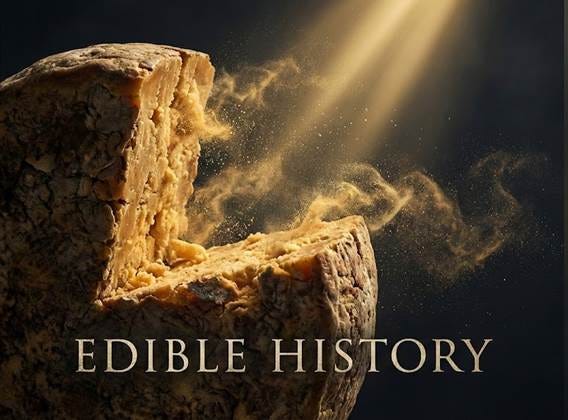
The Ark of Taste is not the Ark of the Covenant, though one might be forgiven for imagining it that way, less divine wrath, more slow-food reverence; fewer golden cherubim, more jars of pickled walnuts and wheels of unpasteurised cheese. It does not glow, nor does it require averted eyes upon opening. Instead, it quietly archives what the modern world is in danger of forgetting: flavours tethered to place, tradition, and time, now slipping beneath the tide of industrial standardisation.
In essence, this is a catalogue of foods on the edge of disappearance, endangered rather than extinct. They aren’t gone yet, but they remain culturally fragile, like dialects worn down by mass media or heirloom seeds lost to monocropping.. These are foods still made, perhaps by a single family in a remote valley, or in dwindling numbers by ageing hands who haven’t found successors. Some persist out of stubborn pride; others survive only because someone, somewhere, filed the paperwork to get them listed. Their endangerment isn’t always about scarcity of raw materials, though that can be part of it, but about the fraying of knowledge, the collapse of micro-economies, or legislation that outlaws traditional methods. Unpasteurised milk cheeses. Cured meats made without nitrates. Grains too low-yielding for modern combines. Fermented things that smell, frankly, challenging to the uninitiated.
Take the UK’s contributions. One might expect Cornish pasties or Yorkshire puddings, ubiquitous, commercially robust, reproduced in service stations from Penzance to John o’Groats. But those aren’t in the Ark. They’re too safe. Too popular. The Ark seeks the vulnerable. So instead, we find old Gloucester beef, not the cheese, though that’s also heritage-listed elsewhere. This is the beef from a rare cattle breed once common in the Severn Vale, now surviving on only a handful of farms. Its marbling is distinctive, its flavour deeper, almost nutty, but raising Gloucester cattle takes time, pasture, and patience, none of which align neatly with supermarket procurement cycles. The breed nearly vanished after the Second World War, when intensification favoured Friesians and Herefords; it was saved only by a few devoted conservationists and, later, by the Rare Breeds Survival Trust, founded in 1973 precisely because so many native breeds had dwindled to a handful of herds, some, like the Gloucester, down to fewer than fifty animals nationally by the 1970s.
Then there’s the Jersey Royal potato. The Jersey Royals aren’t endangered in the sense of disappearing from shelves. They’re still harvested each spring, still draped in damp seaweed and sold in string bags. Their listing comes from the fragility of the traditional méthode Jersey: hand-planting in steep, south-facing côtils, terraced fields fertilised with vraic, or Channel Island seaweed, and harvesting before full maturity to preserve that prized waxy tenderness. Mechanisation, labour shortages, and competing land uses have thinned the ranks of vraic-dragging farmers. The potato survives, but the *practice* that gives it its character trembles. In fact, vraic-dragging itself, hauling seaweed at low tide, pitchfork in hand, boots sinking in the silt, is now so rare that younger Islanders sometimes mistake it for folklore, a sepia-toned postcard from Grandfather’s day. Yet without vraic’s trace minerals, iodine, potassium, magnesium, the tubers lose that saline tang, that mineral backbone that makes them sing with butter and chives.

Cheese dominates the British roster, as though the national soul were coagulated in rennet and aged in damp stone barns. Single Gloucester, for instance, smaller, milder, and more fragile than its double cousin, is made by only a few dairies now, often using milk from the very same old Gloucester cows. It’s a closed loop of decline: fewer cows, less milk, fewer cheesemakers, less demand, fewer calves born. A similar spiral affects certain Lincolnshire Poacher variants, or the Stilton-style Colston Bassett, which nearly vanished after foot-and-mouth disease decimated herds and EU hygiene regulations tightened. Some survive only because a single cheesemaker refused to retire, or because a food writer happened to visit at the right time and wrote a very persuasive article.
But it’s not just the big names. There’s Dorset Blue Vinney, that crumbly, blue-veined survivor made from skimmed milk, a product of frugality, born when the cream was reserved for butter or sale. Its name, “Vinney”, likely derives from “vinny”, dialect for mouldy, and it was once so humble it was fed to farm dogs. Yet it clung on in cellars and dairies, unrefrigerated, wrapped in muslin, turning sharper by the week, until Slow Food nudged it back into the light. And Double-Curd Lancashire, the “tacky” kind, made by mixing curds from two or even three consecutive days’ milking, lending it a lactic tang that builds like a chord resolving. It was the cheese of mill towns, wrapped in wax paper and sold from carts, a sturdy lunch for weavers who couldn’t afford meat. Now, fewer than a dozen producers make it the old way, slow, cool, with raw milk and cloth-bound wheels turned by hand on wooden shelves.
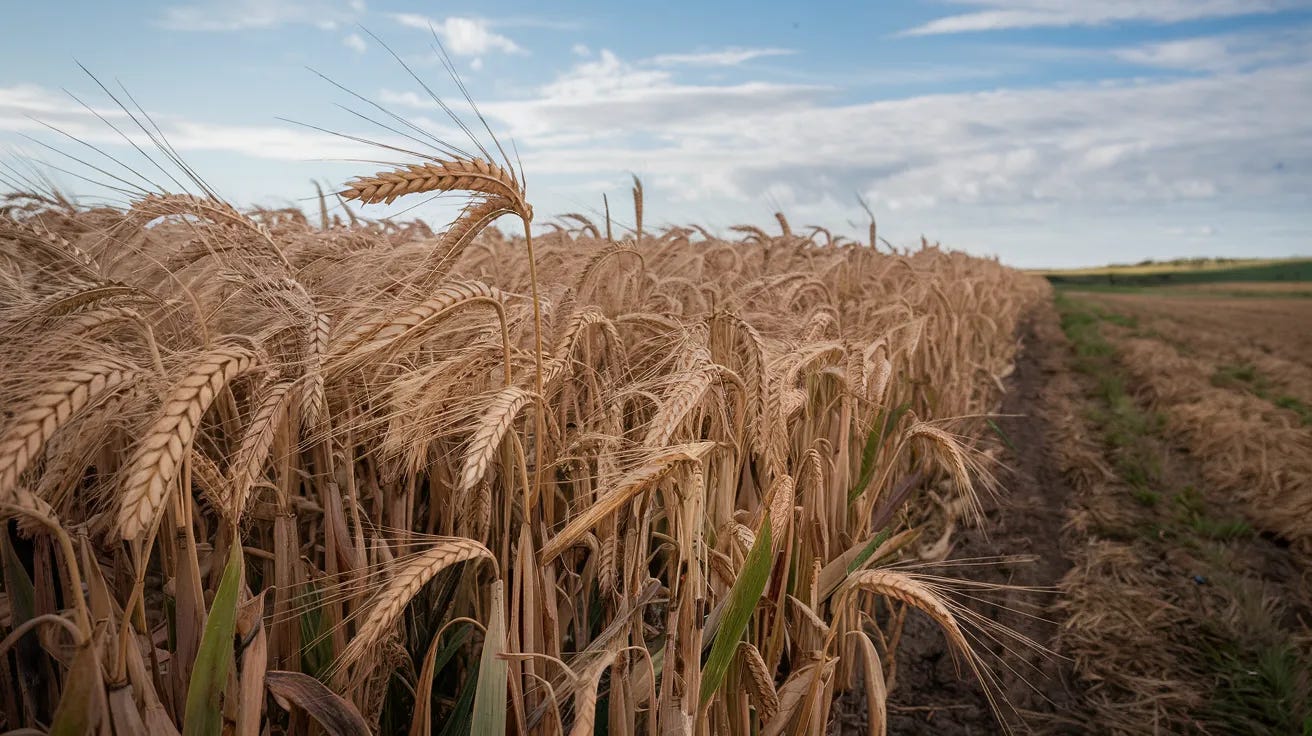
Grains feature as well. Instead of standard wheat, we find landrace varieties like Hen Gymro (Welsh for “Old Man”) or bere barley, grown in Orkney for over a thousand years and milled into bannocks or distilled into whisky with a distinct maritime tang. These grains are genetically diverse, adapted to local soils and weather, but low-yielding and difficult to process with modern machinery. Millers who still bother with them do so out of devotion or because a craft distiller pays a premium, but the margins are thin, the apprentices scarce. Bere, in particular, ripens faster than modern barley, a necessity in the brief Orkney summer; it’s shorter-stalked, wind-resistant, and thrives in thin, salty soils where hybrid varieties sulk. Yet combine harvesters clog on its brittle straw, and its yield per acre is a third of modern malt. So it survives, improbably, in pockets, on Westray, on Papa Westray, kept alive by farmers who also happen to be archaeologists of their own landscape.
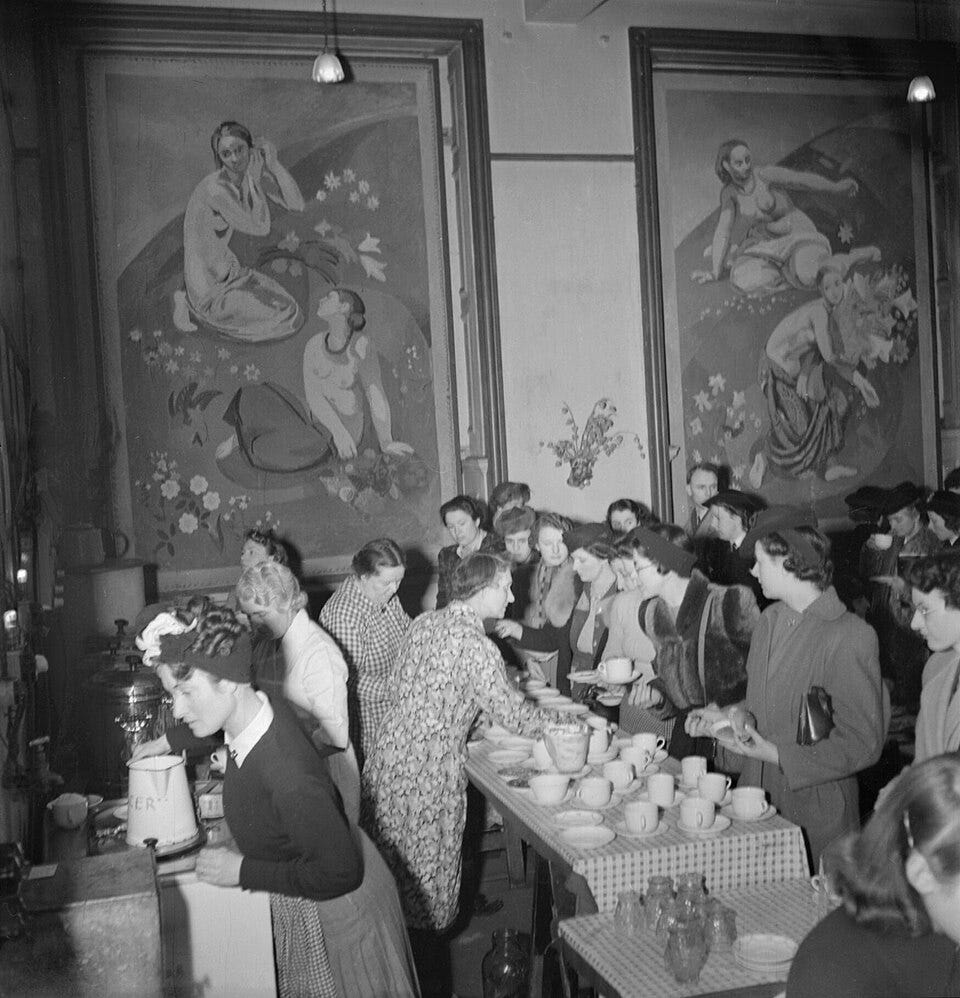
There’s also the matter of things no longer made at all, but preserved in memory and oral history: the British Restaurant. The British Restaurant was no chain or franchise. It was a network of government-run canteens created during the Second World War, evolved from community feeding centres and renamed, supposedly at Churchill’s urging, to sound more proudly patriotic. They served meat pies, spam fritters, and Woolton pie (a vegetable concoction named after the Minister of Food) for under a shilling. They weren’t glamorous, but they were democratic, open to office workers, factory hands, evacuee children, offering hot, nutritious food in a time of rationing and rubble. The last closed in 1947. The concept lingers only in archives and episodes of *Dad’s Army*, where Mainwaring frets about hygiene inspections while Pike drops a suet pudding on the floor.
In practice, the British Restaurant was a precision instrument of wartime logistics. Meals were priced up to a strict ceiling of 9d, equivalent to £3 today, as a carefully calibrated intervention in the social metabolism of a nation under siege, rather than an act of charity. No diner, however hungry, could be served more than one portion of meat, game, poultry, fish, eggs, or cheese per sitting. The rule existed to promote nutritional fairness, not to punish appetite. The Ministry of Food’s dieticians calculated each meal to deliver roughly one-third of the day’s energy needs, paying special attention to Vitamin C in an era when citrus fruit was a luxury reserved for the infirm. Cabbage therefore reigned supreme. Its steady supply represented a quiet triumph of public health policy over palate fatigue, a victory of nutrition over novelty.
The scale was staggering: by 1943, 2,160 such establishments served 600,000 meals daily, nearly one meal for every 70 people in Britain. Half were run at a profit, though profit was never the point; they operated on a non-profit basis, managed by local authorities or voluntary agencies, often housed in schools and churches for their existing kitchens and dining halls. In London, mobile canteens rolled through bomb-scarred streets, dispensing stew directly into air-raid shelters, a hot meal as both morale and medicine. Central depots supplied one in ten restaurants, standardising portions while allowing for regional variation. Scottish diners received herring and neeps; Londoners, mashed potatoes as a stand-in for bread. Volunteers sliced the potatoes using mechanical mandolines rather than knives, producing enough mash to feed a battalion.
After the war, 678 endured as civic restaurants, licensed under the 1946 Civic Restaurants Act, a Labour initiative to sustain the wartime ideal of universal, nourishing food. But the Act imposed a three-year loss limit, beyond which ministerial permission was required to stay open. Cambridge’s last civic restaurant lasted until 1970, shuttered only with the redevelopment of Lion Yard. As Minister John Strachey observed, private catering had “on the whole and by and large, catered for the middle class and not for the working class”, a truth the British Restaurant had temporarily, gloriously, inverted.
Ah, but the British Restaurant was more than a canteen. The system itself became a social experiment conducted in plain sight, operating for survival and solidarity instead of profit. At its peak in 1943, over two thousand such establishments dotted the country, serving six hundred thousand meals a day for ninepence, equivalent to about three pounds today. Schools, church halls, even repurposed tram depots became dining rooms; mobile canteens trundled through bomb-scarred streets in East London, ladling stew into enamel mugs for those who’d lost everything but their ration books. Menus, designed by ministry dieticians, aimed to provide one-third of daily energy requirements. Cabbage featured heavily for its Vitamin C, a bulwark against scurvy when oranges were rationed for invalids. Potatoes replaced bread, scarce under flour restrictions, and volunteers laboured over clattering mandolines to meet demand.
The irony, of course, was that while the British Restaurant served the working class with meatless roasts and suet dumplings, private restaurants, those still standing after the Blitz, continued largely untouched by rationing. There, a diner could still order three courses, though the bill was capped at five shillings (about seventeen pounds in today’s money), and no single meal could contain more than one serving of meat, fish, or cheese. The divide wasn’t hidden; it was institutional. As John Strachey, Labour’s postwar Minister of Food, put it rather baldly: *“private enterprise in the catering trade has, on the whole and by and large, catered for the middle class and not for the working class.”* Some British Restaurants were converted postwar into civic restaurants, Cambridge kept one running until 1970, but most faded, victims of austerity fatigue and the rise of the deep-fat fryer. They were egalitarian, frugal, efficient, and utterly unfashionable by the time rock ’n’ roll arrived.
Across the Channel and beyond, the Ark of Taste quietly preserves what industrial food systems forget: the recipes themselves and the worlds that gave rise to them. Its UK entries, Old Gloucester Beef, Jersey Royal potato, Dorset Blue Vinney, Double-Curd Lancashire, Bere meal, Formby Asparagus, Green ormer, represent endurance rather than nostalgia. Each meets strict criteria: sustainably produced, uniquely flavoured, and tied to a specific ecoregion, tradition, or practice. Inclusion requires formal nomination, tastings, and verified producers. Preservation here is active work, encouraging cultivation through continued use.
The Ark includes over 5,300 items globally: Manx Loaghtan lamb, Herdwick sheep, Windermere Char, Kentish Cobnuts, Somerset Cider Brandy, Three Counties Perry. The catalogue lists breeds, cultivars, and prepared foods as living options rather than museum pieces. Bere barley, grown in Orkney for over a millennium, endures because millers still grind it and distillers still ferment it, not because it sits preserved in a vault. The green ormer, gathered by free-divers at spring tides under strict quotas, persists only because law and lore align to protect its slow reproduction. These are not relics. They are refusals, to streamline, to homogenise, to forget that flavour has geography, and that geography has memory.
Endangerment isn’t always about disappearance. Sometimes it’s about *misrecognition*. You’re not longer culturally dying out like Welsh died out, that sort of thing. That’ll do, endangered heritage foods. So is it all stuff that people either can’t be arsed to make any more, they’ve decided it’s not good for you and it’s gone out of fashion kind of stuff and then everyone’s forgotten about it? Yeah, pretty much. It may still exist in memory, but only barely. Or rules have prevented it being done, like unpasteurised milk, that kind of thing.
If one were to browse through the United Kingdom’s section of the Ark of Taste, a pattern soon reveals itself: cheese, grains, and the occasional potato. That, more or less, is the history of Britain on a plate, curdled, milled, and unearthed. It’s comforting, in a way, that our national soul can be traced through things that ferment quietly in the dark. The Ark isn’t much concerned with the likes of Cornish pasties or Yorkshire puddings; they’re far too safe, appearing in motorway cafés, service stations, and the hands of weary commuters from Penzance to Perth. No, the Ark seeks the fragile ones, the foods whose existence depends on a few stubborn enthusiasts who refuse to believe progress always tastes better.
There’s Single Gloucester cheese, for instance, small and mild and nearly mythological, still made by the same handful of dairies that keep the breed of old Gloucester cattle from slipping into oblivion. Or bere barley, grown in Orkney for a thousand years, its flavour somewhere between toast and sea wind. The yield is laughably low, but those who grow it speak of it like a family member, temperamental, beloved, impossible to replace. And then there’s the Jersey Royal potato, still draped in seaweed each spring, its delicate texture owed to steep côtils hand-planted on sunlit slopes. Fewer and fewer farmers still bother; the rest have traded in their seaweed rakes for machinery and sanity.
It’s a melancholy list, but a proud one too, a roll call of foods kept alive through devotion, nostalgia, and a faint sense of defiance. And then, in the midst of all this rustic romance, a surprise: the British Restaurant. Not, as the name might suggest, a chain of steakhouses with laminated menus, in reality, it denoted a network of government-run canteens from the Second World War. These served hot, hearty, and faintly beige meals to the public when rationing had reduced the nation’s appetite for variety. Woolton pie (a vegetable affair named after the Minister of Food), spam fritters, puddings of indeterminate origin, this was cuisine designed to nourish morale as much as the body.
Churchill, ever the showman, supposedly approved the name himself, perhaps envisioning something more glamorous than a queue for stew. But the name stuck, and so did the idea: that food could be patriotic without being pompous. The restaurants were open to all, office clerks, factory workers, evacuee children, and for a few pence you could eat your fill, or at least as much as wartime decency allowed. They closed in 1947, leaving behind a few photographs, some dented trays, and a quiet idealism: that good food could be shared, democratic, and sustaining in more ways than one.
In its own way, the British Restaurant belongs in the Ark as much as any cheese or grain. It was a recipe for community, served with ladles instead of spoons, and like so many things British, remembered fondly only after it was gone.
A food may still be produced, but in a diluted, homogenised form, stripped of its terroir, its ritual, its rough edges. The Ark tries to capture the *authentic* version: the one wrapped in beech leaves, the one fermented in oak barrels buried in the yard, the one that requires three days and a specific phase of the moon. It’s less a museum and more a living will for flavour.
And yes , there are fermented or heavily smoked fish traditions too. Alongside dishes like Sweden’s notorious Surströmming, you’ll find British coastal equivalents (think richly salted herring, smoked in old fishing cottages now holiday rentals). These foods aren’t for everyone. You don’t serve one expecting smoked salmon , you tell the story of wind-bleached nets, salt brine, long-cold smoke. You might pair it with oatcakes and strong tea, quietly hoping your guest realises it’s about more than flavour: it’s about keeping a tradition alive.
Even more obscure is the green ormer, *Haliotis tuberculata*, a sea snail once gathered by hand off the Channel Islands, prized for its firm, slightly iodine-rich flesh, traditionally braised with parsley and shallots. Overharvesting and strict conservation laws (it’s now illegal to collect ormer during its breeding season, or with scuba gear, free-diving only, and only at low spring tides) have made it vanishingly rare on menus. The fishery survives, just, in Jersey and Guernsey, regulated to the point of ritual: each diver may take only two ormers per day, each at least 9 cm in shell length. It’s sustainability as asceticism, a luxury that refuses to scale.
The Ark doesn’t judge. It doesn’t say *this is better than that*. It simply says: *this exists, and it might not for much longer*. That simple act resists the slow drift of forgetting, holding fast to what remains shared. Because once a flavour vanishes, it’s not just a recipe lost. It’s a story. A landscape. A way of marking time, by the lambing season, the barley harvest, the first frost that crisps the kale for colcannon. The Ark of Taste holds those stories in suspension, like fruit in aspic: glistening, delicate, and terribly easy to overlook, until it’s too late. And perhaps, within its record of the nearly lost, the Ark offers more than preservation. It poses a question, one that hovers over every entry: What will we choose to remember? And what, in our rush forward, are we willing to leave behind on the floor of a Woolmore Street canteen, next to a dropped suet pudding and a chipped mug of weak tea?*
Comments
Post a Comment